 Odba
Odba
Trust
"The Site Is Fine" Is the Most Expensive Sentence in Your Business
The cost of a bad website is not the design fee to fix it. The cost is the customers who open it, close it, and call someone else. You never see them leave. There is no line item for the family who quietly picked the business with the cleaner site. The loss is invisible. That is exactly why it goes unfixed for years.
The site is the interview you are not in the room for
A local customer is looking for someone they can trust. They are about to hand over their money, their home, their car, their time. They are not browsing casually. They need a real person who will show up and do the job right. Before they call, they look you up. They open your site on their phone, at night, from a kitchen table or a couch. You are not there. The site is doing the interview alone.
What happens in that moment depends on what they see. A page that takes four seconds to load on a phone. A hero image that does not fit the screen. A header that says "Services" but does not say what kind. A list of offerings in tiny text that reads like it was written for someone in the industry, not for a person at a kitchen table trying to decide who to call.
None of this reads as neutral. It reads as a signal. If the front door is untended, what about the care inside? The visitor cannot see your work, your results, your reputation in the community. They can see the one thing you left out: the site. So they judge it. And they leave.
The 50-millisecond verdict
People form a visual trust judgment about a website in roughly 50 milliseconds. That is not an estimate. It is a measured number from controlled studies on first-impression formation. Lindgaard et al. (2006) found that participants made reliable trust and appeal judgments about web pages after 50 ms of exposure, and those snap judgments held even after longer viewing periods. The brain decides before the conscious mind gets a vote.
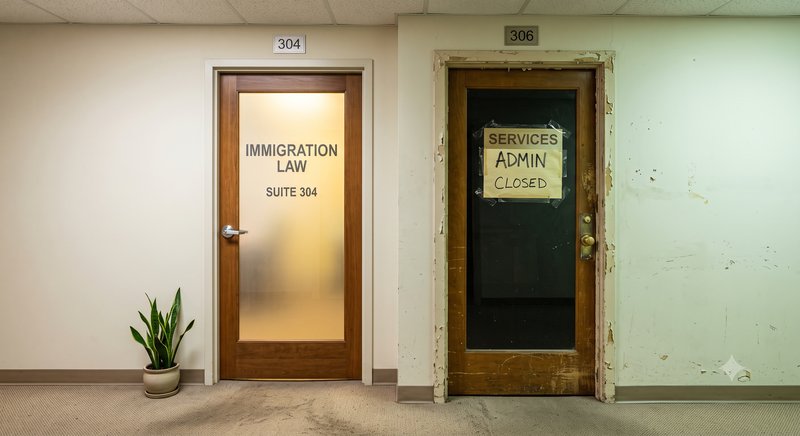
You would never let your storefront have peeling paint and a broken sign. You would not show up to a job in a stained shirt. But when the site is slow, or the text is small and full of jargon, or the page looks like it was built in 2012 and never touched again, that is peeling paint. That is the stained shirt. The customer does not think "this is a good business with a bad site." They think "this is not a careful person." Then they click back to Google and open the next result.
Why "fine" is the dangerous word
"Fine" is the word a business uses when the site is not actively broken. It loads. The phone number is right. Nobody has complained. So the site survives another year without attention.
Here is what "fine" hides. A site that loads in 4.2 seconds loses visitors. Google's own data shows that as page load time goes from 1 second to 3 seconds, the probability of a visitor bouncing increases by 32 percent. From 1 second to 5 seconds, it increases by 90 percent. The visitor never tells you they left. They just leave.
Now apply that math to your business. If 200 prospective customers find your site in a year, and your site loads in 4 seconds, you are not losing 200 customers. You might be losing somewhere between 30 and 60 of them before they ever see your name. They bounced. You never knew they existed. The phone did not ring, and nothing in your accounting said "here is the revenue from the customer who never called."
This is not about being flashy. A site does not need animation. It does not need a custom illustration budget. It needs to load fast, say plainly what you do and who for, and look like the careful professional behind it. That is not vanity. For any business built on trust, the site is the product. It is the first piece of evidence a person uses to decide whether to trust you with their money, their home, their time.
The fix is simpler than the problem sounds
Load the site on a phone. Time how long it takes. Then open it on a laptop and read the homepage out loud. Does it say what you do, in plain words a real customer would use? Does it say who you do it for and where? Does it look like the same business that shows up on time and does the job right?
If the answer to any of those questions is no, the site is not fine. It is costing you quietly. And the fix is not complicated. Clean the copy so a person at a kitchen table can read it and understand. Make the pages load fast by removing the things that slow them down. Match the care on the screen to the care you bring to the job. That is the whole job.
A customer who leaves before they call is not a lost lead. They are lost revenue. You do not get to earn it. You do not even get to know their name. And the only thing standing between you and them was a site that looked like it had not been cared for, by someone they had never met, asking them to trust you with their money.
A site that loads fast, says what you do in plain English, and looks like the professional behind it: that is the minimum any local small business should ship. Odba builds exactly that for small businesses.
Sources: Lindgaard et al. (2006) — 50 ms first-impression formation; Google — bounce probability increases 32% at 3s, 90% at 5s load time.
More in Trust